
1. What first inspired you to take on this epic challenge?
The mountain that first inspired me was Snowdon in Wales. Standing at the summit and looking out across the landscape, I remember thinking how incredible it would be to stand on top of Mount Everest one day. At the time, Everest felt impossible. I had no mountaineering experience, no idea where the journey would take me, and no real plan. It was simply a dream.
As the years went on, that dream never left me. The more mountains I climbed, the more I believed it might actually be achievable. But Everest was never just about reaching the highest point on Earth.
My biggest motivation was to show Deaf people, and really anyone facing barriers in life, that anything is possible if you refuse to let limitations define you. Too often society focuses on what Deaf people cannot do. I wanted to challenge that thinking and prove that our only real limits are the ones we place on ourselves.
If a Deaf lad from Liverpool can stand on top of Mount Everest, then maybe someone else will look at their own dream and realise that it is possible too.
2. What did you find the hardest part of summiting Mount Everest?
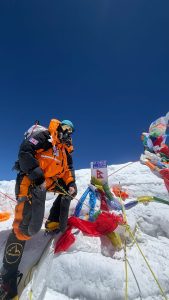
Without a doubt, the hardest part was what happened near the summit when I ran out of oxygen. After years of training and preparation, I found myself in a situation where reaching the top was no longer the main challenge, survival was.
I spent around three hours near the Hillary Step without oxygen and was alone for a significant period of time in the death zone, above 8,000 metres. At that altitude, every step feels exhausting. Your body is shutting down, your thinking becomes slower, and even simple decisions become difficult.
Physically it was the hardest thing I have ever experienced, but mentally it was even tougher. There were moments when I had to dig deeper than I ever thought possible and focus only on taking the next step forward.
Looking back, standing on the summit was an incredible moment, but the real challenge was finding the strength to keep going when everything in my body wanted to stop. That experience taught me more about resilience and determination than any mountain ever could.
3. This is a challenge which is both physically and mentally demanding. Did you surprise yourself in how strong you were in both these areas?
Yes, I definitely surprised myself in both areas. Physically, Everest was far harder than I ever imagined. I went into the expedition carrying a long-term hip injury that had been causing me problems since my training. There were times when I genuinely questioned whether my body would hold up, especially after weeks of trekking, climbing and living at high altitude. Looking back, I am still surprised that I managed to push through the pain and reach the summit.
Mentally, the challenge was just as difficult. One of the biggest setbacks was the delay to the opening of the Khumbu Icefall, which left us waiting for weeks with uncertainty about whether we would even get our chance to climb. As a Deaf person, I also found the expedition very isolating at times. I was surrounded by people, yet communication barriers often left me feeling alone.
Everest taught me that resilience is not about having a perfect journey. It is about adapting to setbacks, staying focused on your goal and refusing to give up when things become difficult. More than anything, it showed me that we are often capable of far more than we believe.
4. How do you hope to inspire people by becoming the first Deaf British and European Everest Summiteer?
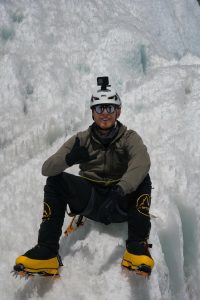
I hope my achievement shows people that being Deaf should never limit what you can achieve in life. Growing up, I often saw expectations placed on Deaf people that were far lower than those placed on hearing people. Too often the focus is on what Deaf people cannot do, rather than what they can do.
By becoming the first Deaf British and European person to summit Mount Everest, I hope to challenge those assumptions and show that barriers can be overcome. The journey was never just about climbing a mountain. It was about proving that with determination, hard work and belief in yourself, goals that seem impossible can become reality.
I especially hope to inspire young Deaf people to dream big and not be afraid to step outside their comfort zone. Whether their goal is in sport, education, business or something completely different, I want them to know that they should never let anyone tell them what they are capable of achieving.
If my journey helps even one person believe in themselves more, then that means as much to me as reaching the summit itself.
5. Was there a moment on this expedition where you thought you wouldn’t be successful?
Yes, there were a couple of times when I genuinely felt like my Everest dream was over.
One of the lowest points was after suffering food poisoning. I became extremely unwell and my energy levels completely crashed. After spending years training for Everest, I suddenly found myself struggling just to function properly. Physically, I felt exhausted and drained, and mentally I started questioning whether I could continue.
There were moments when I wanted to quit. I remember thinking that all the hard work, sacrifice and preparation might have been for nothing. It felt like the mountain was slipping away from me.
But during those difficult moments, I reminded myself why I had started this journey in the first place. I wanted to show that being Deaf should never limit what someone can achieve. I kept telling myself that the biggest limits are often the ones we place on our own minds. Instead of focusing on everything that was going wrong, I focused on taking the next step forward.
Looking back, I am proud that I didn’t give up. Sometimes success isn’t about never doubting yourself, it’s about continuing even when those doubts are at their strongest.
6. After successfully summiting Mount Everest, what will your next summit be?
Although summiting Mount Everest was a huge achievement and a dream I had carried for many years, I don’t see it as the end of my journey. In many ways, it has motivated me even more to continue exploring what is possible.
My next major goal is Denali in Alaska, which is the highest mountain in North America and one of the remaining mountains in my Seven Summits challenge. Having already completed Mount Elbrus, Kilimanjaro, Aconcagua and Everest, Denali is the next step on that journey. It is known for its extreme weather, heavy loads and physical demands, making it a very different challenge to Everest.
I would also love to climb another 8,000-metre peak in the future. Everest may be the highest mountain in the world, but there are many other incredible mountains that continue to inspire climbers and test their limits.
Away from the mountains, I have also secured a place in the London Marathon 2027, which I am really excited about. It will be a completely different challenge, but I am looking forward to pushing myself in a new way and continuing to show that barriers should never define what we can achieve.
For now, I am enjoying time with my family and recovering from Everest, but I am always looking ahead to the next challenge.hen those doubts are at their strongest.
7. What has the response been like so far from those in the Deaf community?
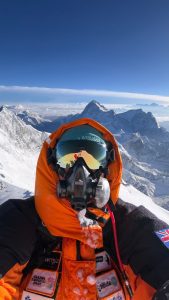
The response from the Deaf community has been incredible and honestly something I never expected. Since returning from Everest, I have received thousands of messages from Deaf people across the UK and around the world. Many have shared how proud they felt to see a Deaf person achieve something that many people thought was impossible.
To be honest, I felt completely overwhelmed by the response. The amount of support, encouragement and kindness I received was amazing, and I felt supported in every possible way. Knowing that so many people were following my journey and celebrating the achievement with me made it even more special.
What has touched me most is hearing from Deaf children, parents and families. I’ve had messages from people saying that my journey has inspired them to think bigger, challenge themselves and believe in their own potential. Those messages mean a lot to me because inspiring others was one of the main reasons I wanted to take on Everest in the first place.
The support has also led to opportunities that I never imagined. I now have 33 confirmed speaking events across the UK, with potential opportunities in Australia as well. I am really looking forward to meeting the people who have supported me throughout this journey and having the chance to share my story with them in person.
Knowing that my climb has helped challenge perceptions of what Deaf people can achieve makes the whole journey even more meaningful than standing on the summit itself.
8. Finally, how do you hope to use your platform to inspire people?
I hope to use my platform, whether that’s through social media, speaking events, media interviews or future expeditions, to inspire as many people as possible. My biggest goal is to show both children and adults that nothing is impossible if you are willing to work hard, stay determined and believe in yourself.
My Everest journey took over 10 years from the moment I first stood on Snowdon and dreamed about reaching the top of Everest. It wasn’t achieved overnight. There were setbacks, doubts, injuries and challenges along the way, but I never gave up on the dream. I hope that by sharing my story, people will realise that there are often no limits except the ones we place on ourselves.
I am also hoping to create workshops where I can share my experiences from mountaineering and high-altitude expeditions. Through these sessions, I want to give people practical insights into preparation, equipment, mountain safety, expedition life and the lessons I have learned from climbing some of the world’s highest mountains.
Most importantly, I want people to leave feeling empowered. If my journey encourages someone to dream bigger, challenge themselves and believe that they can achieve more than they thought possible, then I will feel that I have made a positive difference.
