
Listening Beyond Sound: A Reflection for Deaf Awareness Week
By Evelyn Glennie
There is a persistent misconception that to be a musician, one must hear in the conventional sense. I have spent most of my life dismantling that idea.
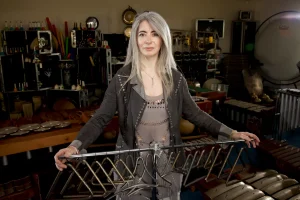
I lost much of my hearing at a young age, and by the time I reached the age of 12 I was profoundly deaf. At first, this was framed to me as a limitation, a narrowing of possibility. Music, after all, was supposed to belong to the hearing. But what if listening is far more expansive than we allow it to be?
Listening is not simply the act of receiving sound through the ears. It is a full-body experience. It is vibration, awareness, attention, curiosity. It is the willingness to connect.
When I perform, I don’t “hear” the music in the way many expect. I feel it through the floor, through the instruments, through the air itself. Every surface becomes alive with information. My bare feet are not a quirk; they are a gateway. Over time, I trained myself to distinguish pitch registers, texture, and sound colours through vibration. This did not happen overnight. It required patience, discipline, and a fundamental shift in how I related to sound.
This is why Deaf Awareness Week matters. It is not only about recognising barriers, but about challenging assumptions, particularly the assumption that deafness equates to absence. Deafness is not an absence of experience; it is a different way of experiencing.
Throughout my journey, I have encountered obstacles of all sorts. Early on, I was told that a deaf person could not study music at a high level. There were doubts about how I would follow orchestras, how I would interpret nuance, how I would succeed in a field so deeply tied to sound. But often, the greatest barrier was not my deafness – it was other people’s expectations of it.
What changed everything for me was learning how to listen differently. This idea is at the heart of Ways of Listening – an initiative between The Evelyn Glennie Foundation and Cities and Memory – whereby we are asking the question ‘What does listening mean to you?’. It encourages people, deaf and hearing alike, to rethink listening as an active, multi-sensory process. Listening is not passive. It is something we choose to do with intention. When we broaden our understanding of listening, we also broaden our understanding of each other.
Similarly, The Evelyn Glennie Foundation’s Listen Up! residency at City Lit, London invites people to engage more deeply with the world around them. It asks a simple but profound question: are we truly listening? Not only to music, but to people, to environments, to perspectives that differ from our own?
Deaf Awareness Week really helps to highlight awareness, accessibility, understanding, and so much more. It’s about recognising that communication and creativity do not belong to one mode of perception. It is about asking: how can we make spaces more inclusive? How can we ensure that talent is not overlooked simply because it presents differently?
For deaf individuals, especially young people, it is important to recognize that your passion is valid and your ambitions are possible. You may need to approach things differently, and you may need to advocate for yourself more than others do, but difference is not deficiency.
I have been fortunate to draw inspiration from many extraordinary individuals within the D/deaf community. Artists such as Sean Forbes, a deaf rapper and co-founder of Deaf Professional Arts Network. Sean has demonstrated how rhythm and language transcend hearing. Mandy Harvey, a deaf singer-songwriter, has captivated audiences worldwide by combining vocal performance with visual and tactile awareness of music. Of course, Ludwig Van Beethoven, who composed some of his most profound works after losing his hearing, remains a powerful historical reminder that deafness and musical brilliance are not mutually exclusive.
There are also countless emerging D/deaf artists, DJs, producers, and performers who are reshaping how music is created and experienced, integrating vibration, visual elements, and technology in innovative ways. Their contributions challenge traditional norms and expand the very definition of music.
It is important that we continue to spotlight these voices as integral contributors to the artistic landscape. Representation and visibility matter. When we see others like ourselves succeeding, it expands our sense of what is possible.
Ultimately, this conversation is not just about deafness or music. It is about how we perceive ability, how we define connection, and how willing we are to challenge our own assumptions.
If there is one thing I have learned, it is this: listening is a choice.
So, during this Deaf Awareness Week, I invite you to listen differently – listen with your whole body, listen with your attention, and listen with your empathy.
You may discover that the world is far richer and far more inclusive than you imagined.
Inspired by Evelyn’s story? Deaf Awareness Week is a wonderful time to take your first step towards learning BSL. Explore our British Sign Language qualifications and find a course near you.
